Make the opportunity bigger.
Before debating the cost of a feature, ask whether we are solving a valuable problem. A better outcome is often hiding behind the first request.
Opinionated. On your side.
Experience is useful when it changes a decision. I’ll ask what we are really trying to achieve, tell you when I think an idea is weak, and help find a better one.
Before debating the cost of a feature, ask whether we are solving a valuable problem. A better outcome is often hiding behind the first request.
Find the few decisions that matter. Build enough to learn. Use evidence to decide where the next hour and dollar should go.
An impressive demo is a start. The ongoing cost, the time it saves, the customers it helps, and the effort to maintain it all belong in the conversation.
A concrete demonstration gives people something to react to. Agree a next action and a date, so a useful idea does not disappear into another meeting.
Business first. Technology second.
Build it. Buy it. Simplify it.
The right answer depends on your business.
My job is to make a sound technical decision and follow through. Sometimes that means custom software. Sometimes it means connecting tools you already pay for. Sometimes it means telling you to save your money.
Books behind the principles
Not because I agree with every sentence. I keep coming back because each one gave me a useful way to think about value, timing, money, or focus.

Alex Hormozi
Make the value stronger before making the price smaller.
I love Alex Hormozi because his results are undeniable, his thinking is clear, and his vision is enormous. He has a way of creating new wins where other people only see a fixed pie. This book keeps pushing me to improve the offer instead of reaching for a discount.
See the book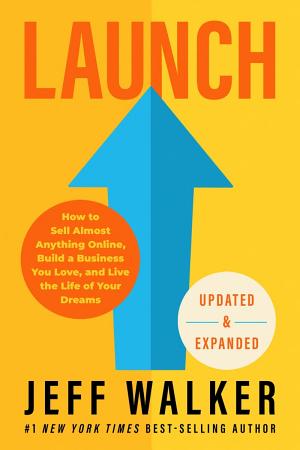
Jeff Walker
Use timing and anticipation to create momentum.
Launch made me pay attention to the time around a product, not only the product itself. A deadline, a sequence, and the anticipation before an event can turn attention into momentum. Anticipation is one of the strongest feelings you can responsibly build around an offer.
See the book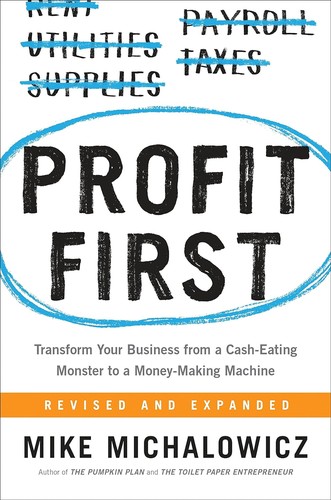
Mike Michalowicz
Make profit a daily operating rule.
Profit First dramatically changed how I think about the financial model of a business. Profit stops being whatever is left at the end and becomes a constraint you use every day. That simple shift creates better decisions long before the accountant closes the year.
See the book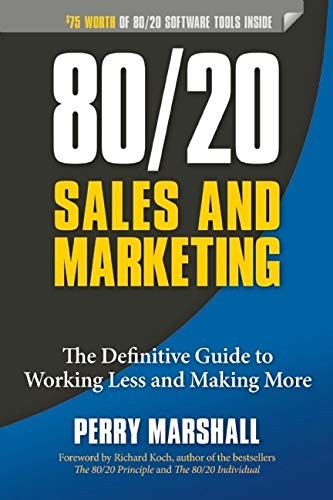
Perry Marshall · foreword by Richard Koch
Find the few moves that change the whole game.
This is the operating system behind my belief that 80/20 is king. A small number of customers, offers, decisions, and actions create most of the result. Find them, protect them, and stop pretending every task deserves equal attention.
See the bookA good working relationship
I like working with people who care about their business and are open to a better way. We can be candid, do good work, and enjoy the process.
Book a call with Ian