Freelancer vs. Agency vs. Technical Partner
How business owners can choose the right delivery model for a technical task, project, rescue, or ongoing business system.
Who this is for
Established owners deciding who should handle software, AI, automation, websites, integrations, or technical operations when they do not want a full internal team.
The wrong comparison is price per hour. The useful comparison is how much ambiguity, coordination, specialist depth, continuity, and business accountability the work requires.
The short answer
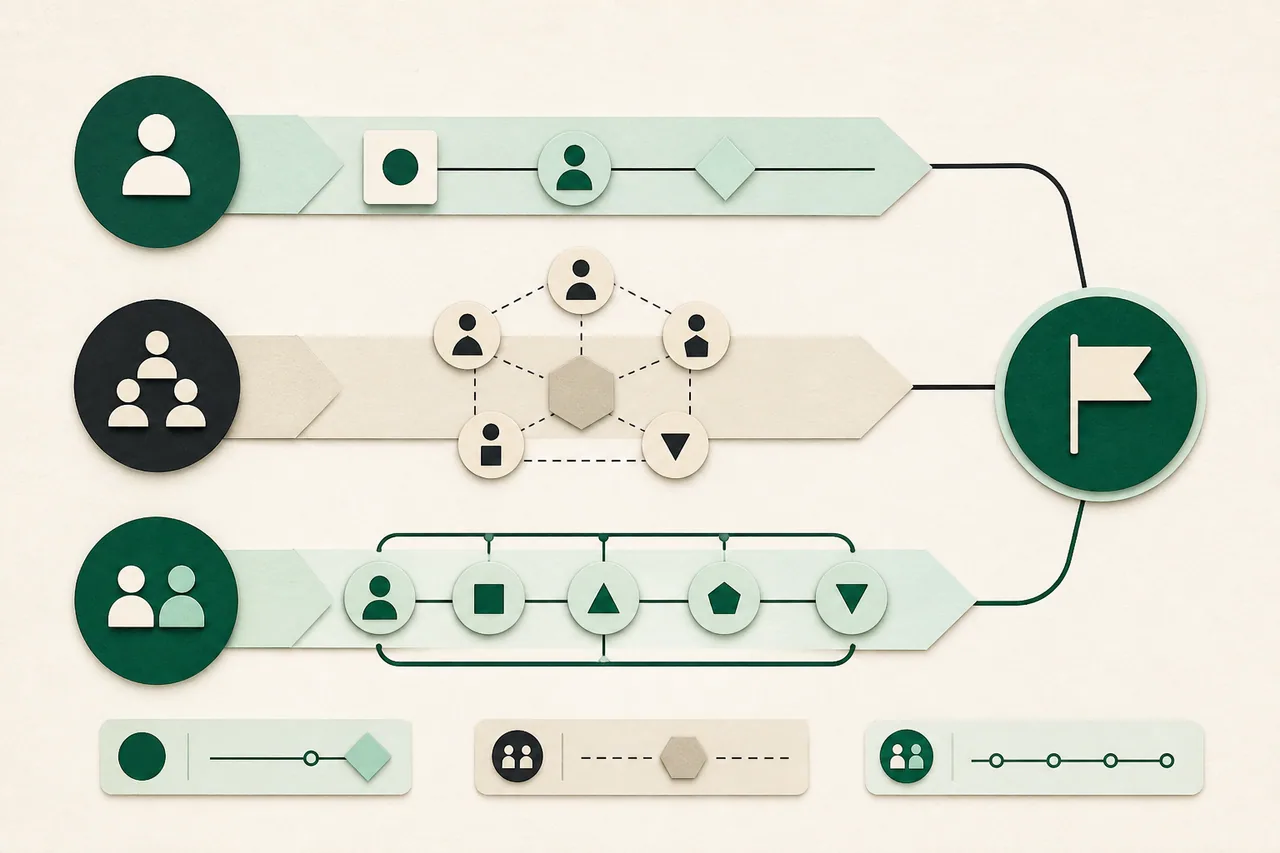
Use a freelancer for bounded execution, an agency for coordinated capacity or specialist breadth, and a hands-on technical partner when the hard part is deciding, integrating, operating, and staying accountable across changing business needs.
What to do in the first hour
- 1.Classify the work: isolated task, defined project, specialist intervention, rescue, or continuing ownership.
- 2.Estimate ambiguity. Can a competent person begin from clear acceptance criteria, or must someone discover the real problem and make tradeoffs with the owner?
- 3.List the systems and people that must be coordinated and the consequence if nobody owns the whole outcome.
- 4.Decide whether you need temporary delivery or an operating relationship after launch.
Diagnose before you buy another solution
A freelancer fits a contained task when scope is clear, dependencies are limited, internal oversight exists, and handoff is straightforward. Marketplaces can work here if you can evaluate the result and tolerate replacement.
An agency fits work requiring parallel capacity, multiple specialties, established delivery process, coverage, or procurement structure. Confirm who actually owns decisions and whether senior expertise persists after the sale.
A technical partner fits when business and technical decisions are intertwined, priorities will change, several systems must work together, the owner needs direct judgment, and accountability must continue through operation. One person still needs specialist help at times; good ownership includes bringing it in.
A practical recovery plan
Score responsibility, not labels
Compare who diagnoses the problem, challenges low-value work, coordinates vendors, manages access, assures quality, deploys, monitors, handles incidents, documents, and remains accountable. Titles are inconsistent; operating behavior is observable.
Check concentration risk
A single partner provides speed and context but creates key-person risk if accounts and knowledge are personal. An agency provides coverage but can hide ownership behind staffing layers. Require company control, evidence, and transition in either model.
Match commercial structure
Use a fixed milestone for a bounded outcome, time and materials for uncertain exploration with tight reporting, a retainer for continuing capacity, or a partnership fee for broad ownership. Do not force undefined rescue work into fake fixed certainty.
Start with a decision artifact
For ambiguous work, buy a short assessment that produces verified facts, options, risks, and a recommended first milestone. This lets you evaluate thinking before committing to a large delivery relationship.
Keep the buyer capable of leaving
Own accounts, repositories, data, domains, designs, and documentation. Require current status, known issues, deployment and recovery notes, license details, and a transition obligation. Healthy leverage is created by value, not captivity.
Questions to ask before approving more work
- Who personally owns the business outcome after the sale?
- Which work will you do, coordinate, or recommend a specialist for?
- How do priorities and estimates change when discovery contradicts the brief?
- What happens during vacation, illness, urgent incidents, or termination?
- What control and usable evidence does my company retain throughout?
Red flags
- — A marketplace task is used for ambiguous access to critical production systems.
- — An agency cannot name the technical lead who will remain involved.
- — A solo partner treats backups, documentation, and independent access as distrust.
- — The commercial model rewards hours or feature volume with no acceptance outcome.
- — The provider claims to be expert in every domain and never recommends outside review.
When to bring in specialist help
Use specialist legal, security, compliance, data, and domain expertise when consequences demand it, regardless of delivery model. The accountable owner should coordinate that expertise and preserve the decision record.